
McLaren F1 vs Ferrari F50
Two 1990s V12s with six-speed manuals and carbon-fiber tubs. One was built to be the best road car; the other to bring a Formula 1 engine to the road.
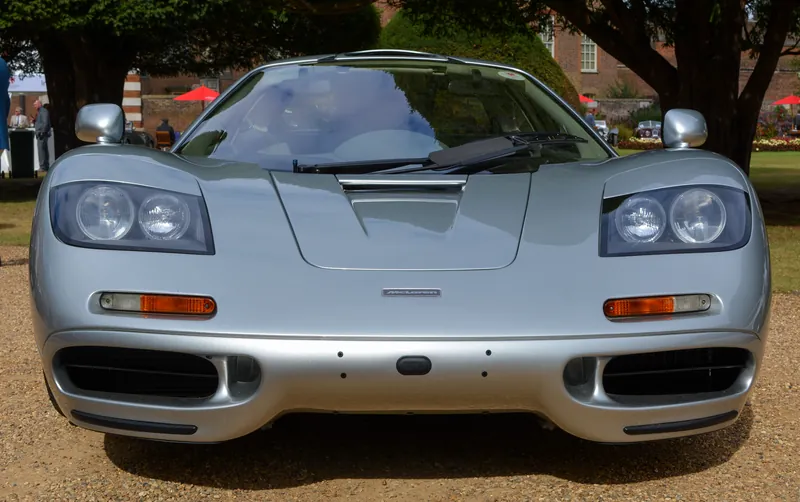
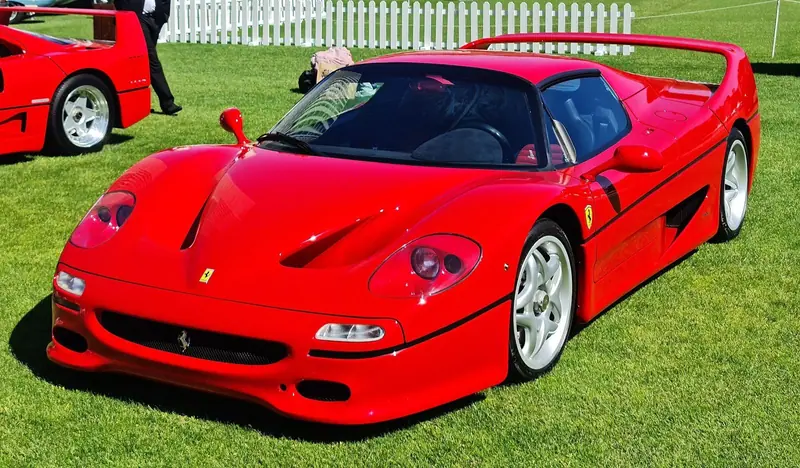
The F1 is better on all seven like-for-like rows. Five rows are not judged because the cars were measured differently, or the figures are in different markets.
McLaren F1 vs Ferrari F50 specs side by side
Engine
Power
Torque
0–60 mph · Car and Driver test
0–100 km/h · manufacturer
Top speed · manufacturer
Top speed · Car and Driver
Curb weight · Car and Driver
Power to weight
Seats and body
Built
Price new
Weights use Car and Driver’s measured curb weights because the makers’ figures are not comparable (McLaren quotes curb, Ferrari quotes dry: 1,140 kg vs 1,230 kg). Prices are in different markets and years, so no winner is given. Power to weight is 627 PS ÷ 1.170 t and 520 PS ÷ 1.397 t. The gaps called out in the verdict are 107 PS, 180 Nm, 227 kg and 0.6 s, all calculated from the rows above.
Where the gap is
Bars are scaled to the stronger car in each row. For time and weight, the better (lower) figure gets the full bar.
The F1 wins on numbers. The F50 on noise.
On paper this is not close. The McLaren has 107 PS and 180 Nm more, weighed 227 kg less on Car and Driver’s scales, and reached 60 mph 0.6 s sooner. It also seats three.
The Ferrari answers differently. Its V12 is derived from the engine Ferrari raced in Formula 1 in 1990, it revs to 8,500 rpm, and the roof comes off. Ferrari built 349, one fewer than it believed it could sell, which tells you who it was for.
you want the faster, lighter and more complete road car.
you want a Formula 1-derived V12 behind your head and an open roof.
Sources for this comparison (3)
- McLaren F1: McLaren Automotive archived specification and production pages; Car and Driver road test, August 1994; Hagerty UK (price).
- Ferrari F50: Ferrari.com F50 page (power, torque, 0–100 km/h, top speed, dry weight, 349 cars); Car and Driver test, January 1997; MotorTrend (US price).
- Where the makers and testers disagree we show both, label which is which, and only judge rows measured the same way.