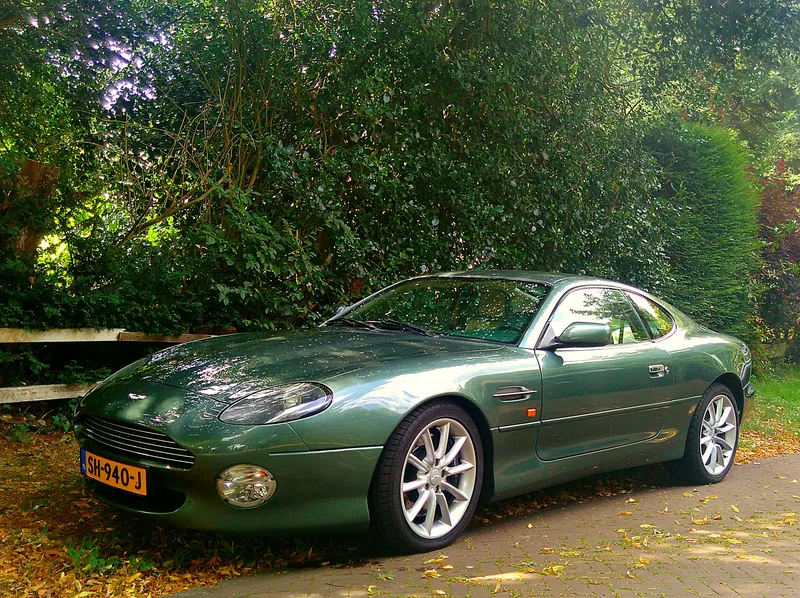
Jaguar XK8 (X100)
The XK8 replaced the XJS after 21 years and introduced Jaguar's first V8. Its lines recalled the E-type, it was built to a much higher standard than earlier Jaguars, and more than 90,000 XK8s and XKRs were built in ten years. Today it is one of the cheapest ways into a V8 Jaguar sports car, as long as you buy one with the right engine history.
Jaguar XK8 (X100) key figures
Swipe for all 4 key specs →
Jaguar XK8 specs
- Engine (1996–2002): 4.0-liter all-aluminum V8 with four camshafts and 32 valves, 290 hp at 6,100 rpm and 284 lb ft at 4,200 rpm. 1,2
- Engine (from late 2002): 4.2-liter V8 with 300 bhp and 310 lb ft in UK figures; Car and Driver lists 294 hp and 303 lb ft for the US car. 3,4
- Gearbox: ZF 5HP24 five-speed automatic on 4.0 cars and a six-speed automatic on the 4.2; rear-wheel drive. 1,3,4
- Top speed: limited to 155 mph (250 km/h). 5
- Tested 0–60 mph: 6.7 seconds for a 1997 XK8 convertible (The Auto Channel). 6
- Bodies: coupe and convertible; supercharged XKR from 1998. 5,3
- US price when new: $64,900 for the coupe and $69,900 for the convertible in 1996. 2
- Production: XK8 coupe 19,748, XK8 convertible 46,760, XKR coupe 9,661 and XKR convertible 13,895. 3
Jaguar XK8 history
Replacing the XJS
Jaguar's sports-car plans stalled through the British Leyland years, privatization and the Ford takeover in 1989 3. In 1992 Bob Dover was appointed to lead a new sports-car team, with chief stylist Geoff Lawson and Fergus Pollock responsible for most of the final design 5,3. To save time and money, the car kept the XJS floorpan but had new suspension, engine and gearbox 3.
Geneva 1996
Jaguar revealed the XK8 coupe at the Geneva Motor Show in March 1996, 35 years after the E-type was launched there 5,7. The Jaguar Daimler Heritage Trust says the pre-production coupe was revealed from a crate during the press conference 5. Motor Trader reported that Jaguar called the car "the spiritual successor to the E-type" and had rejected the F-type name 7. The convertible followed at the New York show in April, and US sales began on 3 October 1996 2,3.
Jaguar's first V8
The XK8 was the first car to use Jaguar's new V8 2,5,7. Jaguar chairman Nick Scheele said the goal was "the performance of a 6-liter V12 with the fuel economy of an engine half that size" 7. The engine was built in a dedicated Jaguar facility at Ford's Bridgend plant in South Wales 1,7. Its cylinder bores used a Nikasil coating applied directly to the aluminum block instead of iron liners 1. Variable cam phasing gave at least 80% of peak torque between 1,400 and 6,400 rpm 1.
XKR and later changes
The supercharged XKR arrived in May 1998 with 370 bhp, a Mercedes-Benz five-speed automatic, CATS adaptive suspension and a mesh grille 3. Steel cylinder liners replaced Nikasil in October 1999 3. In October 2002 the engine grew to 4.2 liters, with 300 bhp for the XK8 and 400 bhp for the XKR, and a 2004 facelift brought a deeper grille. Production ended in 2005 5,3.
On the road
Classic & Sports Car said the press "rapturously received" the XK8, praising its engine, gearbox, handling, quietness and price but criticizing the low-speed ride and cramped rear seats 3. The Auto Channel's 1997 test noted the "trick" variable cam timing and the one-button folding top, and called the convertible a luxury sports car rather than a racer 6. By 2003 the car was showing its age. Car and Driver placed a 4.2 convertible last of five in an October 2003 comparison, calling it "a fine 8/10ths automobile" with "timeless, svelte styling" and a "silky ride" but criticizing its structural shake and J-gate shifter 4.
Jaguar XK8 performance: 0-60 mph and top speed
| Item | XK8 4.0 (1996–2002) | XK8 4.2 (2002–2005) | Source |
|---|---|---|---|
| Power | 290 hp at 6,100 rpm | 294 hp at 6,000 rpm (US) | XK1, XK7 |
| Torque | 284 lb ft at 4,200 rpm | 303 lb ft at 4,100 rpm (US) | XK1, XK7 |
| Gearbox | ZF five-speed automatic | six-speed automatic | XK1, XK7 |
| Top speed | 155 mph, limited | 151 mph, tested | XK3, XK7 |
| 0–60 mph, tested | 6.7 s (1997 convertible) | 6.2 s (2004 convertible) | XK6, XK7 |
Buying a Jaguar XK8: what to check
- Nikasil bores. Engines up to VIN 042775 have Nikasil-coated bores, and some corroded and lost compression. Unless there are bills for a replacement Jaguar engine, have a compression test done 3.
- Timing-chain tensioners. The original plastic tensioners can break and cause catastrophic chain failure. They were improved in 2002, and metal ones were fitted from 2005. Look for proof of replacement on earlier engines and listen for rattles 3.
- Cooling system. The low-volume system warms up quickly but does not tolerate leaks. Look for stains around the water pump, and walk away if you find emulsion in the oil or oil in the coolant 3.
- Gearbox. Jaguar sealed the gearbox "for life", but Classic & Sports Car says to change the oil and filter at about 50,000–60,000 miles. Slipping or jerky shifts mean trouble 3.
- Convertible top. The hydraulic fluid can thicken and slow the top down. It should move quickly and locate cleanly 3.
- Suspension and electrics. Check ball joints, wheel bearings and dampers, and test every window, seat and stalk, because electrical faults can be costly to trace 3.
- Values. In 2019 Classic & Sports Car put an average XK8 coupe at £6,000 and a low-mileage one at £14,000, with convertibles slightly more 3.
Jaguar XK8 questions
What engine is in the Jaguar XK8?
A 4.0-liter V8 with 290 hp, Jaguar's first V8, replaced by a 300 bhp 4.2 in 2002. 1,3
How fast is a Jaguar XK8?
Top speed is limited to 155 mph. The Auto Channel timed a 1997 convertible from 0 to 60 mph in 6.7 seconds. 5,6
How many Jaguar XK8s were made?
66,508 XK8s and 23,556 XKRs, according to Classic & Sports Car's figures. 3
What is the XK8 Nikasil problem?
Early engines have Nikasil-coated bores that can corrode and lose compression. A compression test or proof of a replacement engine is essential. 3
What car did the XK8 replace?
The Jaguar XJS, which had been in production for 21 years. 2,5
Related cars
- Its British rival: the Aston Martin DB7.
- Jaguar's supercar of the same decade: the Jaguar XJ220.
- More from Coventry: the Jaguar hub.
Sources and notes
Notes on the figures
- Engine name. Jaguar's US launch material calls the engine the AJ-V8 1,2. Motor Trader and Classic & Sports Car call it the AJ26 7,3, and the Jaguar Daimler Heritage Trust calls it the AJ8 5. They all describe the same 4.0-liter, 290 hp V8.
- 4.2 output. Classic & Sports Car gives the 4.2 XK8 300 bhp and 310 lb ft 3. Car and Driver's 2004 US test car was rated at 294 hp and 303 lb ft 4.
- End of Nikasil. Classic & Sports Car's timeline says steel liners replaced Nikasil in October 1999. Its checklist gives the cut-off as engine VIN 042775 3. Use the VIN check on any car built around 1999.
Sources
- Jaguar Cars North America, AJ-V8 engine press material, 1996 (via The Auto Channel)
- Jaguar Cars North America, "Jaguar Announces XK8 Introduction", press release, 3 October 1996 (via The Auto Channel)
- Classic & Sports Car, "Jaguar XK8/XKR buyer's guide", Malcolm McKay, 20 September 2019
- Car and Driver, "2004 Luxury Convertibles Compared", October 2003 issue
- Jaguar Daimler Heritage Trust, "1996 Jaguar XK8 Coupé Geneva Motor Show Car"
- The Auto Channel, "Jaguar XK8 (1997)" review
- Motor Trader, "Great expectations", 4 March 1996
Jaguar XK8 (X100) Photos
10 photosJaguar XK8 (X100) Technical Data
Engine and performance
| Engine | 4.0 L V8 32 valves |
|---|---|
| Power | 290 hp 6,100 rpm |
| Torque | 284 lb ft 4,200 rpm |
| Top speed | 155 mph limited |
The car
| Gearbox | ZF 5HP24 five-speed auto |
|---|---|
| Bodies | Coupe and convertible |
| Built | 90,064 incl. XKR |
Jaguar XK8 (X100) vs rivals
Compare XK8Cars from the same years.