Koenigsegg Jesko key figures
Swipe for all 7 key specs →
Spec notes
- Koenigsegg technical specifications for the Jesko Attack and the Jesko Absolut. 1,106 lb-ft is 1,500 Nm times 0.7376, converted. Power figures are Koenigsegg's claims.
- Koenigsegg, Jesko Attack specification.
- Koenigsegg, Jesko Absolut specification. That page does not publish a top speed.
Koenigsegg Jesko specs
Koenigsegg publishes a separate specification page for the Jesko Attack and the Jesko Absolut. The engine output is the same on both. Everything below is the company's own claim unless a sentence says otherwise. Neither page gives a measured top speed, so this page does not print one.
- Engine: twin-turbo aluminum 5.0-liter V8, four valves per cylinder, flat-plane crankshaft, dry sump. Bore 92 mm, stroke 95.25 mm. Compression 9.0:1. Engine weight 189 kg. 1 2
- Power, gasoline: 1,280 hp at 7,800 rpm. Redline 8,500 rpm. Koenigsegg's figure. 1 2
- Power, E85: 1,600 hp. Koenigsegg's figure. Boost is 1.7 bar on gasoline and 2.2 bar on E85. 1 2
- Torque: 1,000 Nm from 2,700 to 6,170 rpm, with a maximum of 1,500 Nm at 5,100 rpm. Koenigsegg's figures. 1 2
- Gearbox: nine-speed Light Speed Transmission, with an electronic differential. 1 2
- Jesko Attack weight: 1,320 kg dry, 1,420 kg curb. 2
- Jesko Absolut weight: 1,290 kg dry, 1,390 kg curb. 1
- Jesko Attack downforce: 700 kg at 250 km/h, 1,000 kg at 290 km/h, and 1,400 kg maximum. 2
- Jesko Absolut drag: 0.278 Cd. Downforce is 40 kg at 250 km/h and 150 kg at the maximum Koenigsegg lists. 1
Koenigsegg Jesko history
One engine, published twice
The Koenigsegg Jesko makes 1,280 hp on gasoline and 1,600 hp on E85, according to Koenigsegg. Both the Attack specification and the Absolut specification use those numbers, at 7,800 rpm for the gasoline figure, with an 8,500 rpm redline. 1 2
The engine is a twin-turbo aluminum 5.0-liter V8 with a flat-plane crank, dry sump lubrication and a carbon-fiber intake. Koenigsegg lists the bore and stroke as 92 mm by 95.25 mm and the compression ratio as 9.0:1. The engine itself weighs 189 kg. Flex-fuel operation is listed as optional. 1 2
Torque is quoted as a plateau and a peak. The plateau is 1,000 Nm from 2,700 rpm to 6,170 rpm. The peak is 1,500 Nm at 5,100 rpm. Both pages print both numbers, so both are shown here rather than collapsed into one. 1 2
The Attack, built to push down
The Jesko Attack is the high-downforce car. Koenigsegg's specification lists a dynamic rear wing with two profiles, an enlarged front splitter with active flaps, wheel-arch diffusers and side winglets. The downforce figures are 700 kg at 250 km/h, 1,000 kg at 290 km/h, and 1,400 kg at the maximum the page states. 2
The body is a two-seat, two-door coupe with a detachable hardtop and, on this version, no roof storage. The chassis is a carbon-fiber monocoque with aluminum honeycomb, rated at 65,000 Nm per degree of torsional rigidity. Dry weight is 1,320 kg and curb weight is 1,420 kg. Length is 4,626 mm, width 2,030 mm, height 1,210 mm, wheelbase 2,700 mm. 2
Brakes are carbon-ceramic, 410 mm and six-piston at the front, 395 mm and four-piston at the rear. Koenigsegg lists its own calipers. Stability control has four settings: Comfort, Wet/Snow, Sport and Track. 2
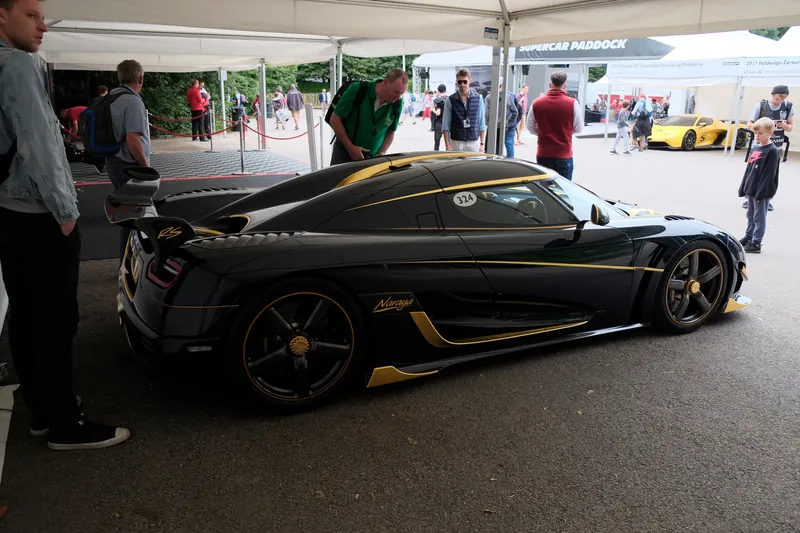
The white car in the gallery, with the rear wing raised and the dihedral door open, is this shape. The Attack page is the one that describes that wing.
The Absolut, built to slip through
The Jesko Absolut uses the same engine output and the same nine-speed gearbox, then changes the body. Koenigsegg lists rear hood fins, a long tail, dished rear wheels and front underbody flaps. The drag coefficient is 0.278. Downforce falls to 40 kg at 250 km/h and 150 kg at the maximum the page gives, which is the point of the car: less drag, not more. 1
Dry weight is 1,290 kg and curb weight is 1,390 kg, 30 kg under the Attack on both measures. Length grows to 4,845 mm. The roof is a removable hardtop that stores under the front hood. Stability control on this page has three settings: Wet, Normal and Track. 1
Koenigsegg's Absolut specification page describes the car, in the page's own summary, as the company's fastest hypercar yet. The same page does not publish a measured top speed, a simulated top speed, or a theoretical top speed. A sentence that calls a car the fastest without a number is a claim about intent. This page repeats the 0.278 Cd and does not invent a speed to go with it. 1
The gray car with the orange stripe and the blue car with the gold stripes in the gallery are Absolut shapes: long tail, no tower wing.
What came before it
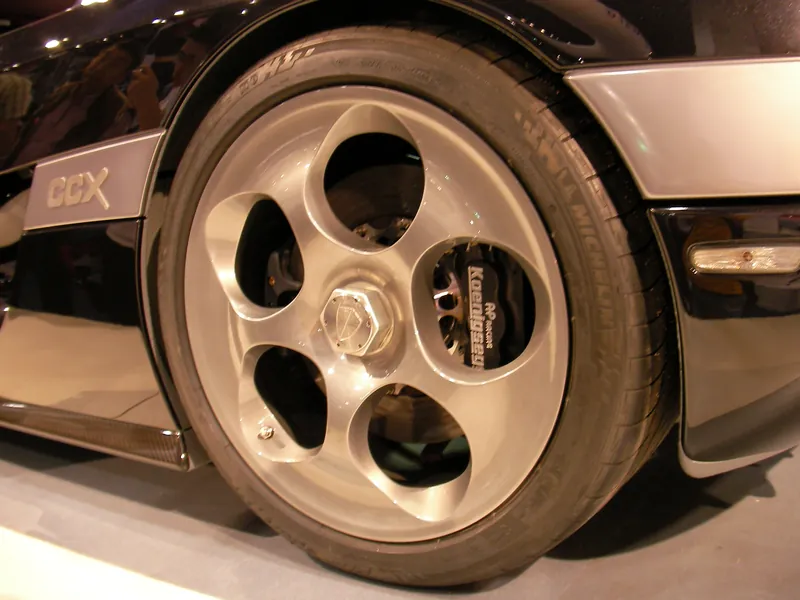
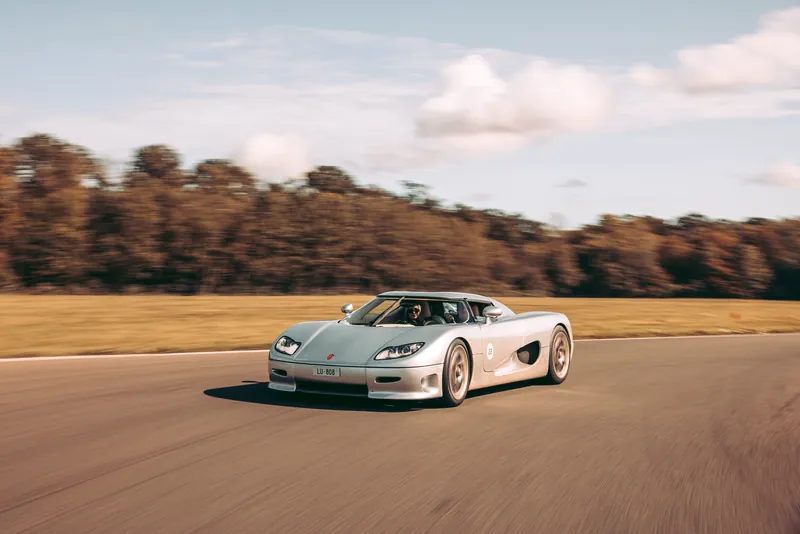
The Jesko's engine is the next step after the cars Koenigsegg already has on this site. The Koenigsegg CC8S was the first production Koenigsegg. The CCX followed it. The Agera is the car the Jesko's V8 is usually discussed against. Those pages carry their own sourced figures. This page does not copy them into the Jesko's spec strip.
Why it's a dream car
The Jesko is a dream car because Koenigsegg will print 1,600 hp on E85 and 1,400 kg of downforce on the same family of car, and will also print a second version whose job is to throw most of that downforce away. The two specification pages make the split explicit. Attack: 1,400 kg of downforce and a wing. Absolut: 0.278 Cd and 150 kg. 1 2 The fantasy is not a single number. It is that a small Swedish maker publishes both, with weights, boost pressures and a gearbox name, and still withholds a top speed rather than guessing one.
Generations and variants
Koenigsegg treats these as two models, not as model years.
- Jesko Attack. The downforce car. Up to 1,400 kg of downforce, 1,320 kg dry, a detachable roof with nowhere to store it, and the large rear wing. 2
- Jesko Absolut. The low-drag car. 0.278 Cd, 1,290 kg dry, a longer tail, and a roof that stores under the hood. Same 1,280 hp on gasoline and 1,600 hp on E85. 1
There is no separate FantasyCars page for each. This page is the hub. Photos are labeled so the wing car is not presented as the Absolut, and the long-tail car is not presented as the Attack.
Rivals
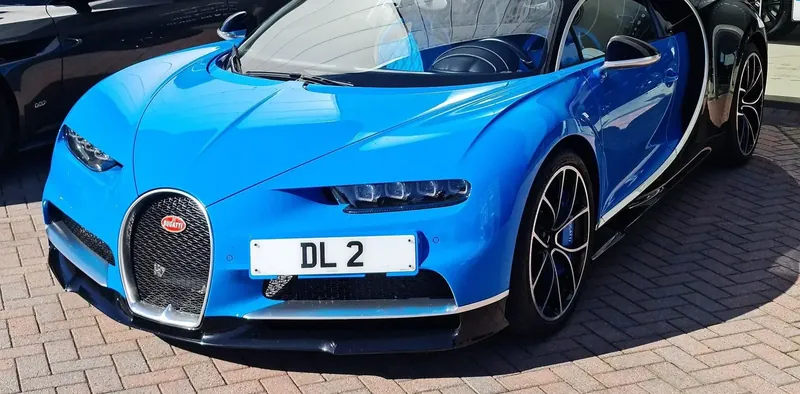
The cars that sit nearest it on this site are the ones from the same company and the Bugatti that defined the previous decade's power figure. The Agera, the CCX and the CC8S are the Koenigsegg line. The Bugatti Chiron is the 1,500 PS car the Jesko's E85 claim is usually set beside. A head-to-head would need both cars measured the same way. These pages do not have that test, so they are linked, not scored.
Koenigsegg Jesko Photos
4 photosKoenigsegg Jesko Technical Data
Koenigsegg's figures
| Engine | 5.0-liter twin-turbo V8 flat-plane crank, 189 kg |
|---|---|
| Gearbox | 9-speed Light Speed Transmission |
Koenigsegg Jesko vs rivals
Compare JeskoCars from the same years.