Mitsubishi Galant VR-4 (EC5A)
The eighth-generation Galant VR-4 put a 280 PS twin-turbo V6 and full-time four-wheel drive in a sharp-suited family sedan. It never came to the US officially, which makes it one of the least-known fast sedans of the 1990s and one of the best value.
Mitsubishi Galant VR-4 (EC5A) key figures
Swipe for all 4 key specs →
Mitsubishi Galant VR-4 specs
| Specification | Figure | Source |
|---|---|---|
| Body code | EC5A (sedan); EC5W is the Legnum wagon | G5 |
| Built | 1996–2002 | G2, G4 |
| Engine | 2,498 cc 6A13TT DOHC 24-valve V6, twin turbochargers and intercooler | G4, G5 |
| Power (manual) | 280 PS (206 kW) at 5,500 rpm | G3, G4, G5 |
| Torque (manual) | 363 Nm (37.0 kg-m) at 4,000 rpm | G3, G4, G5 |
| Power (automatic) | 260 PS, 35 kg-m | G1, G3 |
| Gearbox | Five-speed manual or five-speed INVECS-II automatic | G4, G5 |
| Drive | Full-time four-wheel drive | G5 |
| Wheelbase | 2,635 mm (103.7 in (converted)) | G2, G3 |
| 0–100 km/h | 6.0 s (manual, tested) | G4 |
| 0–400 m | 14.1 s (manual, tested) | G4 |
| Galants built, all versions | 95,452 | G4 |
Mitsubishi Galant VR-4 history
A rally name on a new kind of sedan
The original Galant VR-4 was a four-cylinder Group A homologation car and the technical ancestor of the Lancer Evolution. When the badge returned for the eighth-generation Galant it was on a larger, more refined car with a V6 1. Mitsubishi launched the new Galant sedan and its Legnum wagon sibling in August 1996, under the slogan "high-density sports sedan" 2. Most Galants used Mitsubishi's new 1.8-liter GDI direct-injection four, which Car and Driver Japan describes as the world's first mass-production engine to inject fuel directly into the cylinders; the VR-4 sat at the top of the range with the 2.5-liter V6 2.
The 6A13TT twin-turbo V6
The VR-4's engine is the 2,498 cc 6A13TT, a transverse, intercooled V6 with two small turbochargers chosen for response rather than a single big surge 1. In manual form it made 280 PS at 5,500 rpm and 363 Nm at 4,000 rpm 3,4,1. Automatic cars were rated at 260 PS 5,3. Unique Cars recorded 6.0 seconds to 100 km/h and 14.1 seconds for the 400 meters with a manual car 4.
Versions
Japanese catalogs split the range into the VR-4 and the VR-4 Type S, later also a Type V. The Type S carried the fuller performance chassis specification, and the equipment changed with the 1998 facelift 5,1. Relevant versions had Active Yaw Control at the rear axle, the torque-splitting system Mitsubishi also used on the Lancer Evolution 1. A limited Super VR-4 with its own body styling was also sold, and Unusual Cars warns that its production figures are repeated inconsistently 1.
Awards and the end of the line
The Galant and Legnum won the 1996–97 Japan Car of the Year award 2,4. The VR-4 left the range in 2002, when Mitsubishi cut the Galant line-up to four-cylinder models only 5,4.
Buying a Mitsubishi Galant VR-4
Almost every Galant VR-4 outside Japan is a private import, so start with the paperwork. Unusual Cars advises confirming the EC5A chassis code, grade, gearbox and original equipment from the Japanese auction sheet and export records; body kits do not make a car a Super VR-4 or a Type S 1.
What to check
- Engine. Evidence of timing belt, tensioner and water pump replacement; the radiator top tank, hoses, turbo pipework and plastic blow-off valve 1. Heat around the turbochargers shortens hose life, blue smoke points to bore or piston wear and white smoke to a failed turbo, and misfires can mean a failed coil pack 4.
- Drivetrain. The standard clutch was a weak point, and stronger replacements put more strain on the half-shafts and differential; listen for rumbling from the rear differential 4. Active Yaw Control needs the correct fluid, and groaning or warning lights need diagnosis 1. Manual cars are scarce; most have the automatic 4.
- Body. Rust around the front and rear windshields, the hood lip, door skins and spare wheel well, and faded or flaking paint on horizontal panels 4.
- Suspension and steering. Thumps from worn struts or top mounts, and more than 20 mm of free play in the steering, which points to a worn rack 4.
What it costs
In Australia, where many have been imported, Unique Cars' 2022 value guide put a Legnum automatic at A$4,000 fair, A$9,500 good and A$15,000 excellent, with a manual in close to showroom condition at about A$20,000. It adds that the Galant sedan typically sells for about 30 percent less than a Legnum in comparable condition 4.
Mitsubishi Galant VR-4 questions
How much power does the Galant VR-4 have?
280 PS (206 kW) with the manual gearbox and 260 PS with the automatic. 3,4,1
Was the Galant VR-4 sold in the US?
No. The EC5A VR-4 was built for Japan; cars elsewhere are private imports. 4,1
How fast is the Galant VR-4?
Unique Cars recorded 0–100 km/h in 6.0 seconds with a manual car. 4
What is the difference between the Galant VR-4 and the Legnum VR-4?
The Galant (EC5A) is the sedan and the Legnum (EC5W) is the wagon; they share the twin-turbo V6 and four-wheel drive. 1
Related cars
- Mitsubishi's other four-wheel-drive icon: the Mitsubishi Lancer Evolution.
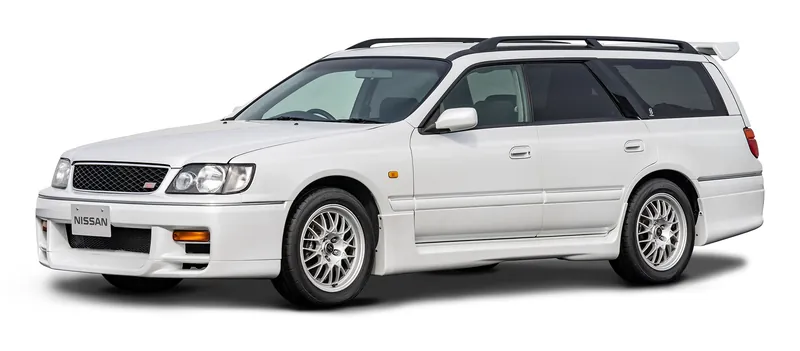
- Japanese rivals: the Nissan Stagea Autech 260RS and the Subaru Impreza WRX.
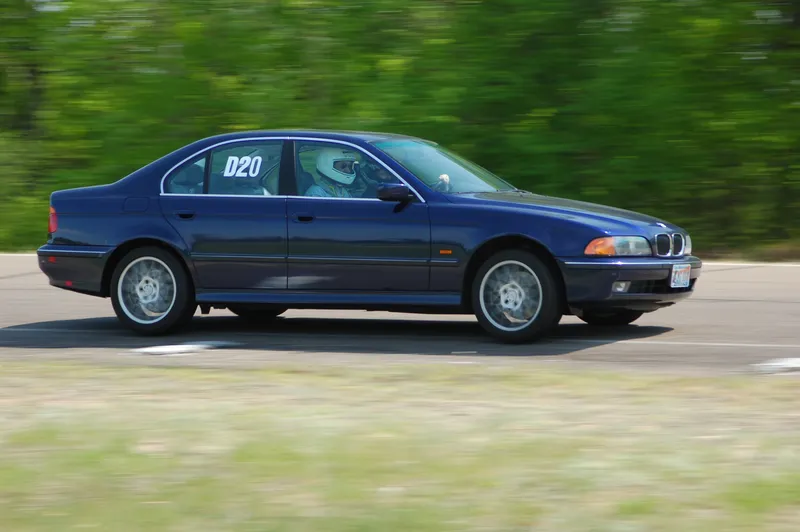
- A European alternative: the BMW 540i (E39).
- More Mitsubishi: the Mitsubishi make page.
- More fast four-doors: Fast Sedans.
Sources and notes
Notes on the figures
- Japan Car of the Year. Car and Driver Japan presents the eighth-generation Galant as the 1996–97 winner 2. Unique Cars says the award went to the Legnum 4. The award covered the Galant and Legnum family; we name both.
Sources
- Unusual Cars UK, "Mitsubishi Galant and Legnum VR-4: history and buying guide", 11 Oct 2023
- Car and Driver Japan, "1996 Japan Car of the Year: the eighth-generation Mitsubishi Galant" (Hiroshi Okazaki, first published 26 Oct 1996, republished 9 Nov 2023)
- Carfolio, "1996 Mitsubishi Galant VR-4" and "Galant VR-4 E-EC5A (4WD) SYGF"
- Unique Cars, "Mitsubishi Legnum/Galant VR4 buyer's guide", issue 467, Jun/Jul 2022
- Vehicles (b-cles.jp), "Mitsubishi Galant (8th generation, 1996-2005)"
Mitsubishi Galant VR-4 (EC5A) Photos
6 photosMitsubishi Galant VR-4 (EC5A) Technical Data
Engine
| Type | 6A13TT V6 twin-turbo |
|---|---|
| Displacement | 2,498 cc DOHC 24v |
| Power | 280 PS at 5,500 rpm |
Drivetrain
| Drive | Full-time 4WD AYC on some versions |
|---|---|
| Gearbox | Five-speed manual or INVECS-II automatic |
Mitsubishi Galant VR-4 (EC5A) vs rivals
Compare Galant VR-4Cars from the same years.