Peugeot Oxia key figures
Power
680 bhp
Autocar
Weight
1377 kg
Torque split
25/75
front/rear
Shown
1988
Paris
Swipe for all 4 key specs →
Oxia specs
| Specification | Figure | Source |
|---|---|---|
| Engine | 2849 cc twin-turbo V6 (Garrett T3) | OX1 |
| Power | 680 bhp at 8200 rpm (Autocar); 670 bhp (Top Gear) | OX1, OX2 |
| Torque | 535 lb-ft at 4500 rpm | OX1 |
| Drive | Four-wheel drive, 25/75 split; four-wheel steering | OX1 |
| Weight | 1377 kg | OX1 |
| Top speed | 180 mph (Autocar); 217 mph unofficial (Top Gear) | OX1, OX2 |
Peugeot Oxia history
Peugeot showed the Oxia at the 1988 Paris motor show. Its name refers to a region of Mars 1. The car used a 2849 cc twin-turbo V6 derived from the WM-Peugeot Le Mans engine, with Garrett T3 turbochargers 1. Autocar quoted 680 bhp at 8200 rpm and 535 lb-ft at 4500 rpm 1. Top Gear gave 670 bhp 2.
The Oxia engine and chassis
The Oxia combined four-wheel drive, a 25/75 front/rear torque split and four-wheel steering 1. Autocar listed 1377 kg 1.
Speed reports need qualification. Autocar's retrospective headline described 180 mph, whereas Top Gear reported an unofficial 217 mph 1,2. Top Gear also quoted under five seconds to 60 mph and a cost of eight million francs 2.
Oxia questions
Where does the name come from?
A region of Mars 1.
What did it cost to build?
Top Gear says eight million francs 2.
Related cars
- The make: Peugeot.
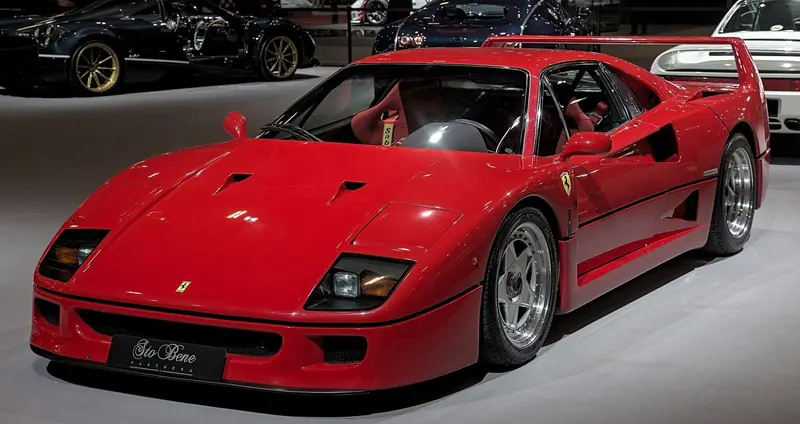
- A rival of 1988: Ferrari F40.
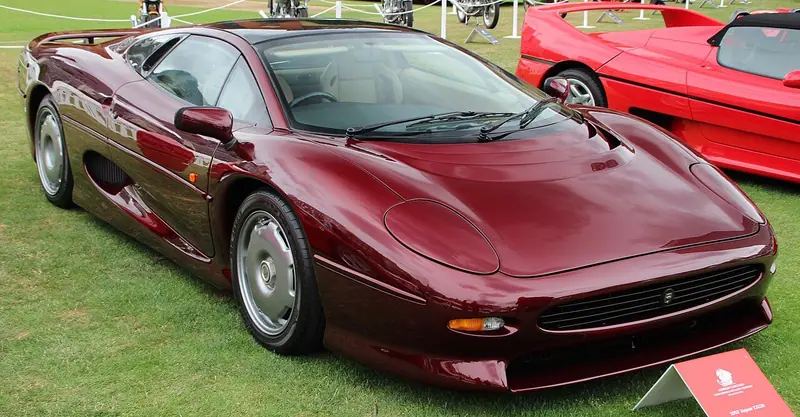
- Another late-1980s concept: Jaguar XJ220.
Peugeot Oxia Photos
1 photo1 / 1Swipe, or tap to open full screen
Peugeot Oxia vs rivals
Compare OxiaCars from the same years.