Porsche Carrera GT key figures
Swipe for all 5 key specs →
Spec notes
- Porsche, classic model page for the Carrera GT, type 980. Top speed is Porsche's 'over 330 km/h.'
Porsche Carrera GT specs
The figures in this list are from Porsche's own classic-model page for the type 980. Where that page does not give a number, the row is absent.
- Engine: naturally aspirated V10 with dry-sump lubrication. The racing design was 5.5 liters. The series engine is 5.7 liters. 1
- Power: 450 kW (612 PS) at 8,000 rpm. 1
- Top speed: over 330 km/h (205 mph). Porsche's wording is "over," so this page does not round it to a single measured figure. 1
- Gearbox: six-speed manual. 1
- Production: 1,270 vehicles. Porsche's classic page says the series was built from 2003. 1
- Place in the family: ten years after production ended, the Carrera GT joined Porsche's classic lineup. The page does not date that anniversary to a calendar year. 1
A curb weight, a 0–100 km/h time and a new-car price are not on that page. They are left off the spec strip.
Porsche Carrera GT history
A V10 that was meant for racing
The Porsche Carrera GT makes 450 kW (612 PS) from a 5.7-liter naturally aspirated V10. Porsche's classic page says the engine was designed for racing at 5.5 liters and enlarged to 5.7 liters for the road car, with dry-sump lubrication. 1
That is the whole of the origin story the page is willing to tell in one paragraph, and it is enough to separate this car from the turbo 911s around it. The Carrera GT is mid-engined. The power goes through a six-speed manual. Porsche says the top speed is over 330 km/h, which it also prints as 205 mph. 1
The show car that came first has its own page. The 2000 Carrera GT concept is not this car. Porsche's classic page is about the series car, the type 980, built from 2003. 1
What 1,270 cars means
Porsche says the Carrera GT was an exclusive run of 1,270 vehicles. The same paragraph says production of the car has ended, and that the model joined the classic family ten years after that end. The page dates the start as 2003. It does not print a final calendar year next to the 1,270. 1
The number is small next to a 911 and large next to a one-off prototype. It is the figure that makes the car a production model rather than a showpiece: enough cars that Porsche will still talk about parts, classic partners and factory restoration, which is the rest of that page. 1
The body is described there as a design that still looks related to Porsche's production cars, mixed with the marks of the company's racing cars. The page does not itemize the carbon structure or the clutch. Those details are widely repeated elsewhere. They are not repeated here, because they are not on the page this article is using. 1
After the V10
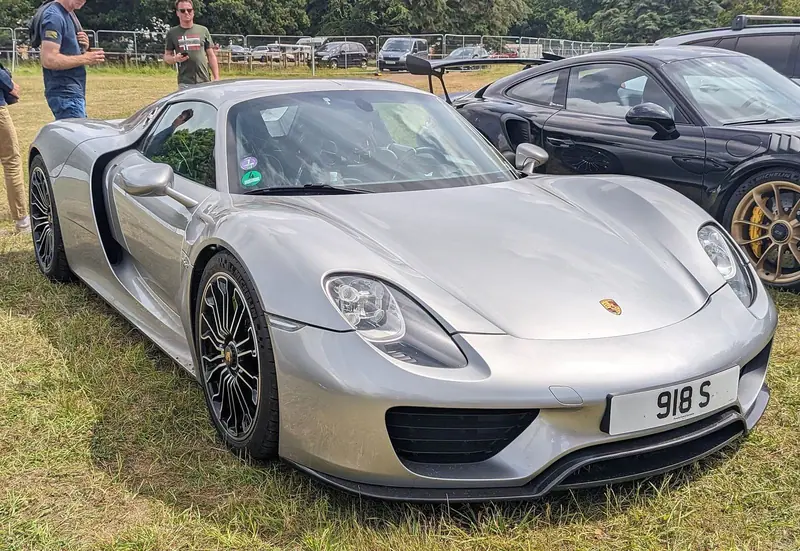
The next Porsche flagship on this site is the 918 Spyder, a hybrid from 2013 to 2015, not a bigger version of the Carrera GT. The Carrera GT's claim, on Porsche's own wording, was the 612 PS V10, the manual gearbox and a top speed over 330 km/h, in a run of 1,270. The 918's claim is a different powertrain and a different lap. Both pages keep their own sources. 1
Why it's a dream car
The Carrera GT is a dream car because Porsche put a racing V10 in a road car, then stopped. The classic page is plain about the ingredients: 5.7 liters, 450 kW, a six-speed manual, a top speed over 330 km/h, and 1,270 cars built from 2003. 1 There is no hybrid system and no dual-clutch story on that page. The appeal is a large, naturally aspirated engine and a number of cars small enough that the survivors are treated as classics, which Porsche itself now does.
The concept and the road car
- Concept: the Carrera GT concept is the show car. It is a different page, with its own sources. Do not read its output as the production figure.
- Series car, type 980: 5.7-liter V10, 450 kW (612 PS) at 8,000 rpm, six-speed manual, top speed over 330 km/h, 1,270 built from 2003. 1
The photos on this page are the production shape: the silver road car, not the concept.
The manual gearbox is the other half of the specification Porsche bothers to print. There is no mention on the classic page of a paddle shift or an automatic. The driving force, in the page's words, goes through a six-speed manual. That is a choice, and it is why the car is still talked about next to later hybrids that did not offer one. 1
Porsche also puts the car in its classic program rather than in the current configurator. The page points owners toward classic partners and factory restoration, and it says the primary job of that restoration team is to maintain historic Porsche vehicles with the original tools and the archive. That is not a performance figure. It is evidence that Porsche treats the 1,270 cars as a finished set. 1
Rivals
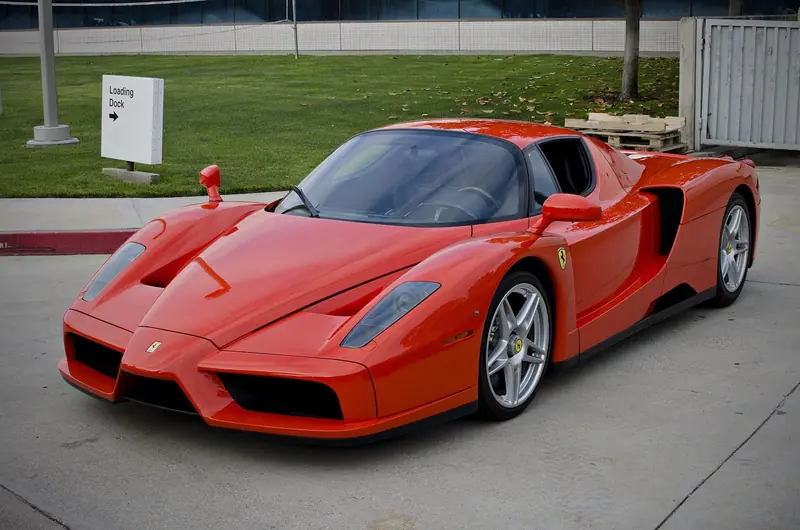
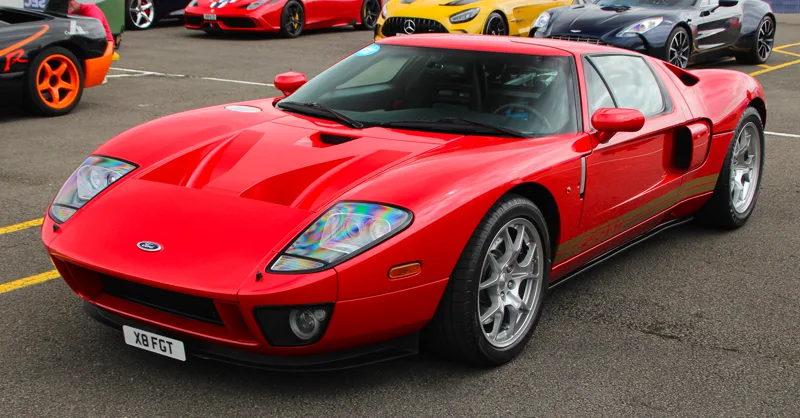
The early-2000s mid-engined flagships that have pages here are the Ferrari Enzo and, a decade later, the Porsche 918 Spyder. The Ford GT is the other road car of that moment with a racing name and a published test. A fair lap-time comparison is not on Porsche's classic page, so this article does not award one.
Sources and notes
Porsche Carrera GT Photos
4 photosPorsche Carrera GT Technical Data
Porsche's figures
| Power | 450 kW (612 PS) at 8,000 rpm |
|---|---|
| Production | 1,270 built from 2003 |
Porsche Carrera GT vs rivals
Compare Carrera GTCars from the same years.