Aston Martin
Aston Martin began in a London mews workshop in 1913 and took its name from a hill climb. Its DB cars carry the initials of David Brown, the industrialist who saved it in 1947.
Aston Martin history
Lionel Martin and Robert Bamford
Lionel Martin and Robert Bamford went into business together in London in 1913, in a small workshop in Henniker Mews 1,2. Aston Martin dates the partnership to 15 January 1913 1. Their first car, the "Coal Scuttle", used a Coventry-Simplex engine in a chassis of their own design 1. The name came from Aston Hill, the Buckinghamshire hill climb that Martin's prototype conquered 3.
Racing came first. The A3, the company's third car, set light-car speed records at Brooklands with Lionel Martin driving, and Aston Martin entered the French Grand Prix in 1922 and Le Mans for the first time in 1928 2,3. Money did not keep pace, and new investors took over in the late 1920s 1,3.
David Brown and the DB cars
Industrialist David Brown bought Aston Martin in February 1947 and Lagonda that September, gaining a six-cylinder engine that went into the 1950 DB2 1. Production moved from Kensington to Feltham and in 1955 to Newport Pagnell 3. In 1959 the DBR1 finished first and second at Le Mans 1. The 4.0-liter DB5 of 1963 became James Bond's car in Goldfinger the next year 1,3. Brown left in 1972 1.
Ford, the DB7 and Gaydon
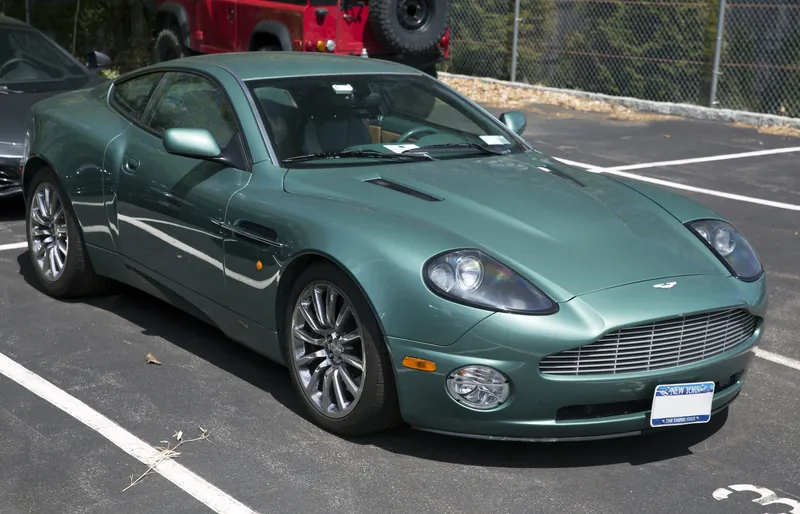
Ford took a 75% stake in 1987 and full ownership in 1993 3. The DB7, built at Bloxham with a pressed-steel body, brought back the DB initials, and a 420 bhp V12 followed at the end of the decade 1,3. The aluminum and carbon-fiber V12 Vanquish arrived in 2001, and in 2003 Aston Martin moved into Gaydon, its first purpose-built factory and still its global headquarters 1,3. A consortium of Kuwaiti investors bought the company in 2007 3. The DBX SUV is built at St Athan in Wales, opened in 2019, and Aston Martin returned to Formula 1 as a works team in 2021 1.
Aston Martin timeline
| Year | Event | Source |
|---|---|---|
| 1913 | Lionel Martin and Robert Bamford found the company in London | AM1, AM2, AM3 |
| 1922 | French Grand Prix | AM3 |
| 1928 | First Le Mans entry | AM3 |
| 1947 | David Brown buys Aston Martin, then Lagonda | AM1, AM3 |
| 1959 | DBR1 wins Le Mans | AM1 |
| 1963 | DB5 | AM1, AM3 |
| 1987 | Ford buys 75% | AM3 |
| 1994 | DB7 | AM1 |
| 2001 | V12 Vanquish | AM1 |
| 2003 | Gaydon headquarters and factory | AM1, AM3 |
| 2019 | St Athan factory | AM1 |
Aston Martin cars on FantasyCars
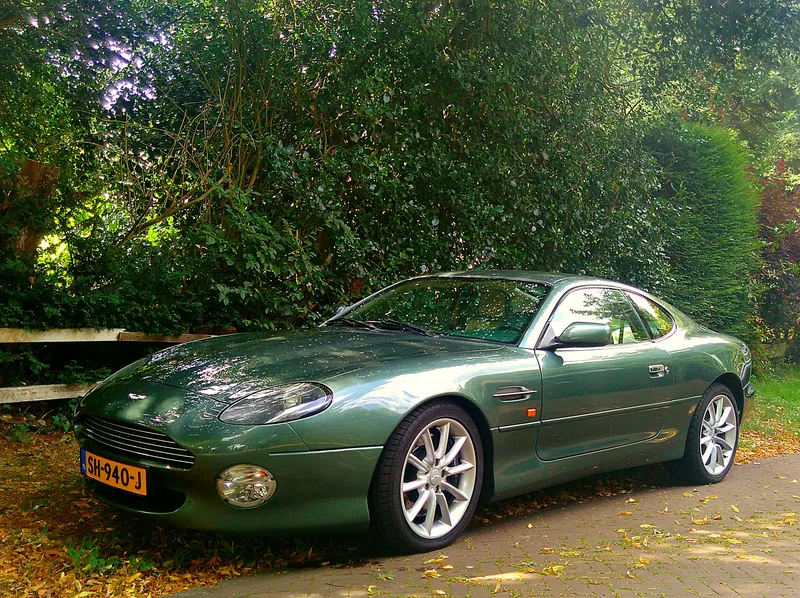
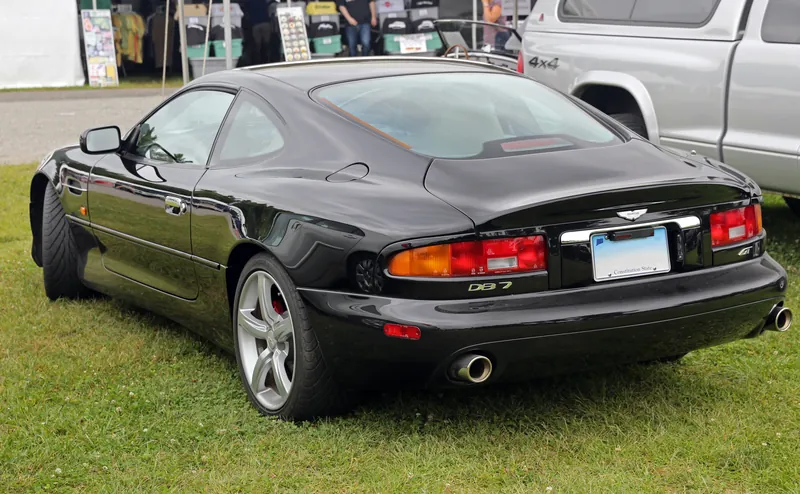
- DB7: the Aston Martin DB7 and the run-out DB7 GT.
- From the Ford years: Aston Martin's former stablemate, the Jaguar XK8.
Where sources disagree
- The 1920s rescue. The Guardian dates the investors' rescue to 1926 3; Aston Martin's own timeline places the sale to new owners in 1927 1.
- DB7 launch. The Guardian gives 1993, the year Ford took full control 3; Aston Martin's timeline lists the DB7 under 1994 1.
Aston Martin questions
Who founded Aston Martin?
Lionel Martin and Robert Bamford, in London in 1913. 1,2,3
Why is it called Aston Martin?
After the Aston Hill climb in Buckinghamshire, combined with Lionel Martin's name. 3
What does DB stand for?
David Brown, who owned Aston Martin from 1947 to 1972. 1,3
Where are Aston Martins built?
Sports cars at Gaydon, England; the DBX at St Athan, Wales. 1