JC Indigo 3000
In 1993 a Swedish businessman stood on TVR's stand at the London motor show and decided Sweden should build its own sports car. Thirty months later the Indigo 3000 was on the road, with a Volvo straight-six behind its front axle. Only 43 were made.
JC Indigo 3000 key figures
Swipe for all 4 key specs →
JC Indigo 3000 specs
| Specification | Figure | Source |
|---|---|---|
| Engine | Volvo 3.0-liter straight-six, 24 valves, mounted behind the front axle | J1, J3 |
| Power | 204 hp (150 kW) at 6,000 rpm | J2, J3 |
| Torque | 267 Nm (197 lb ft (converted)) at 4,300 rpm | J2 |
| Gearbox | Five-speed manual from the Volvo 960 | J1 |
| Drive | Rear-wheel drive; limited-slip differential optional | J1 |
| Weight distribution | 50/50 (maker's figure) | J1 |
| Curb weight | About 1,125 kg (2,480 lb (converted)) | J2 |
| 0–100 km/h | 6.5 s (tested, with limited-slip differential) | J1, J2 |
| 0–160 km/h | 18.4 s (tested) | J2 |
| Top speed | 210 km/h (130 mph (converted)) with the soft top | J1, J2 |
| Braking, 100–0 km/h | 39.5 m (tested) | J2 |
| Price new | SEK 250,000 base (June 1996) | J1, J2 |
| Built | 43, including pre-series cars | J3 |
JC Indigo 3000 history
From Earls Court to Arvika
Auto Motor & Sport traced the Indigo from idea to delivery in 30 months. Bengt Lidmalm had the idea on 21 October 1993 at TVR's stand at Earls Court in London. Jösse Car AB was formed in Arvika in February 1994, the first prototype was finished in January 1995, the car passed its crash test at the Swedish road research institute VTI in May 1995, and the first customer car was delivered in June 1996 1. The name comes from Jösse härad, the district around Arvika in Värmland, and the plan was to build 500 cars a year 1,2.
A Volvo heart and Swedish parts
The Indigo was designed by Hans Philip Zackau, a former Volvo exterior design manager 1,2. Much of it came from Volvo: the straight-six, the gearbox and rear suspension from the 960, the seat bases from the S40 and the steering column from the 850. The fuel tank came from the Saab 900 1. The engine sat entirely behind the front axle, which gave the car what Jösse said was a 50/50 weight distribution 1. Teknikens Värld noted that the car had no airbags, no power steering and no brake servo 2.
On the road
Auto Motor & Sport tested chassis number four in June 1996. With the optional limited-slip differential it reached 100 km/h in 6.5 seconds, against 10.0 seconds for an Alfa Romeo Spider 2.0 and 9.1 seconds for a BMW Z3 1.9, and it was the cheapest of the three. The magazine praised its strong engine, gearbox, stability and comfortable ride, and marked it down for weak detail finish and slow steering responses 1,3. Teknikens Värld measured 6.6 seconds to 100 km/h and called it "a rocket at the traffic lights" 2,4.
Closure and revival
Despite European type approval and passed crash tests, financing ran short and production ended in 1999 after 43 cars 2. In 2014 von Braun Sports Cars bought what remained of the company and announced a revised car, the von Braun 3000 R, with ten Signature Series cars planned 2.
Can you buy a JC Indigo 3000?
Rarely. With 43 built, Indigos seldom come up for sale, and the Swedish owners' club keeps a list of people waiting to hear when one does 2,4. If you find one, the mechanical parts are mostly Volvo 960 components, which helps with running costs 1. Check the fiberglass body and interior finish closely, since Auto Motor & Sport criticized both on early cars, and ask for the car's chassis number and history 1.
Alternatives
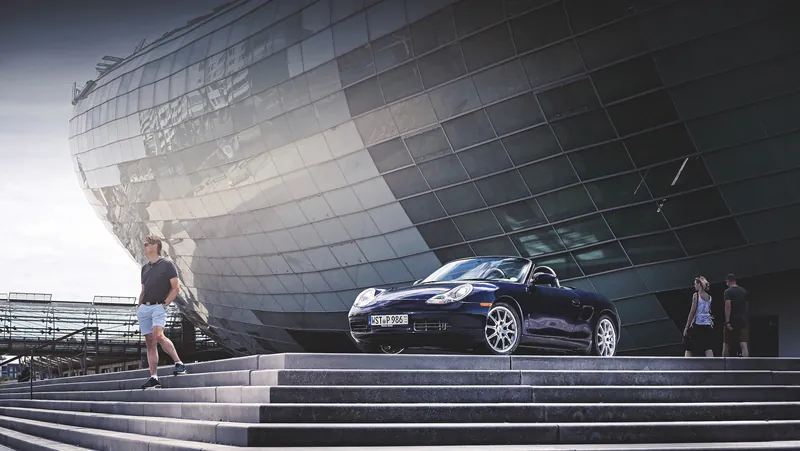
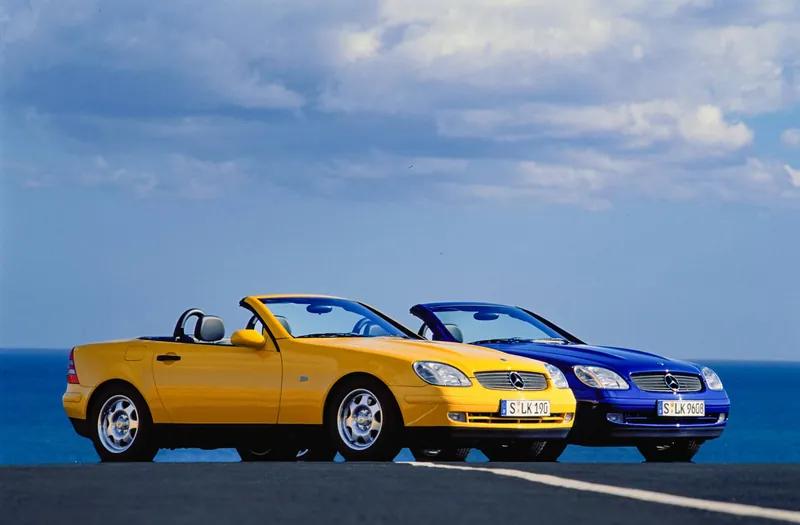
For a front-engined, rear-drive roadster with a big six and a similar spirit, consider a TVR or the BMW Z3 the Indigo was tested against. Among cars we cover, the Porsche Boxster and the Mercedes-Benz SLK are the easiest roadsters of the period to find.
JC Indigo 3000 questions
What engine does the Indigo 3000 use?
A Volvo 3.0-liter straight-six with 204 hp, shared with the Volvo 960. 1,3,2
How many Indigo 3000s were built?
43, including pre-series cars, by 1999 according to Teknikens Värld; other lists give 44. 2,5
What does JC stand for?
Jösse Car, after Jösse härad, the district around Arvika in Värmland. 2
Related cars
- The British maker that inspired it: the TVR Speed 12.
- Roadsters of the same era: the Porsche Boxster and the Mercedes-Benz SLK.
Sources and notes
Notes on the figures
- Production. Teknikens Värld says 43, including pre-series cars 2. Other published lists give 44 5.
- Weight. Auto Motor & Sport gives about 1,125 kg ready to drive 3 and 1,000 kg dry in its text 1. The owners' club gives about 1,150 kg 4.
- 0–100 km/h. Auto Motor & Sport measured 6.5 seconds 1,3. Teknikens Värld measured 6.6 seconds 4.
- First delivery. Auto Motor & Sport reported the first production cars reaching customers in early June 1996 1; Wikipedia dates the first customer car to March 1996 5.
- Closure. Teknikens Värld says Jösse Car was shut down in 1999 2; Wikipedia says production ran from 1996 to 1999 and the company declared bankruptcy in 2003 5.
- Designer's name. Auto Motor & Sport spells it Zackau 1; Teknikens Värld spells it Zachau 2.
Sources
- Auto Motor & Sport (Sweden), "Nationalsången - Test: Indigo 3000", Gunnar Dackevall, June 1996
- Teknikens Värld, "Svenska sportbilen JC Indigo 3000 återuppstår!", 19 Dec 2014 (updated 18 Aug 2020)
- Auto Motor & Sport (Sweden), "Data och jämförelse med konkurrenterna" (comparison table for the June 1996 test), archived
- Indigoklubben (Swedish owners' club), "Om Indigo 3000"
- Wikipedia, "Jösse Car"
JC Indigo 3000 Photos
8 photosJC Indigo 3000 Technical Data
Engine
| Type | Volvo straight-six 3.0 L, 24 valves |
|---|---|
| Power | 204 hp at 6,000 rpm |
| Torque | 267 Nm at 4,300 rpm |
Chassis
| Gearbox | Five-speed manual Volvo 960 |
|---|---|
| Balance | 50/50 maker figure |
JC Indigo 3000 vs rivals
Compare Indigo 3000Cars from the same years.